Up early, the snow is soft outside, and all is pure in Pa. squirls and birds root in the feeder outside the window. But overseas, another story unfolds. Missiles fly. Markets twitch. Somewhere, a man in a thousand-dollar suit stares at a screen and decides whether your heating bill goes up this winter.
That’s the romance of geopolitics.
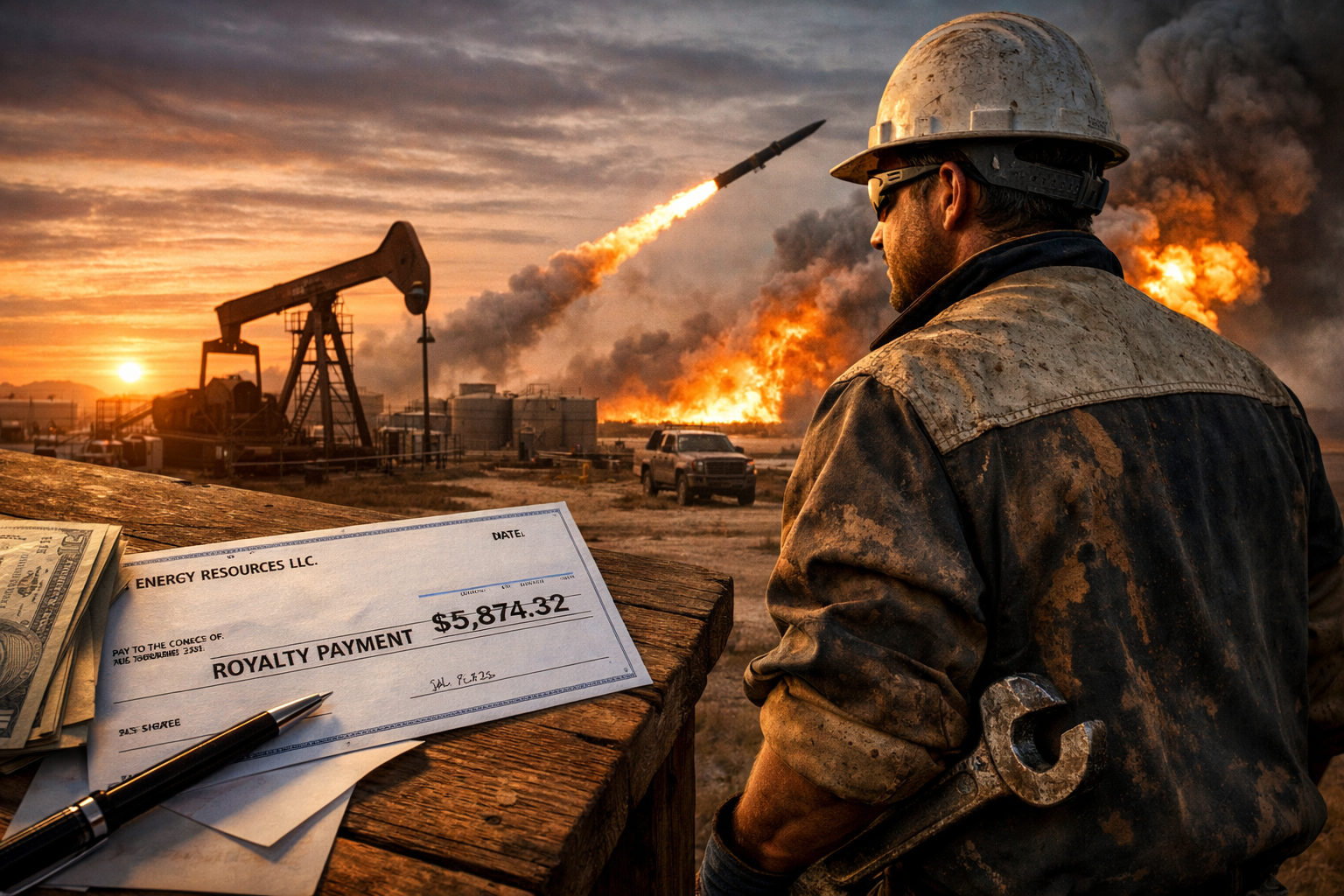
The latest round of fireworks between Israel and Iran didn’t just light up the desert sky — it rattled the pipelines, the tankers, the spreadsheets. You don’t have to be a commodities trader to feel it. You just have to pay a gas bill. Or open a royalty statement at the kitchen table in rural Pennsylvania.
When rockets start streaking across the Middle East, every stock trader from Houston to London suddenly remembers one phrase: the Strait of Hormuz. That narrow strip of water is less a body of ocean and more a choke point with a God complex. A heavy slice of the world’s oil and liquefied natural gas squeezes through there every day. Insurance rates spike. Shipping costs climb. Everyone starts whispering about “risk premium” like it’s a fine wine.
Oil jumps first. It always does. Loud. Flashy. Headlines love it.
Gas follows like the quiet sibling who swears he’s not involved but somehow shows up at the same crime scene. When crude rises, the entire energy complex tightens up. LNG buyers in Europe and Asia start bidding more aggressively. Cargoes get redirected. Storage suddenly looks attractive again.
Back home in the Marcellus, it can feel far away.
But it isn’t.
If global LNG prices surge, American export terminals along the Gulf Coast ship every molecule they can. When overseas buyers are willing to pay more, U.S. gas flows toward the highest bidder. That tightens domestic supply. Henry Hub firms up. Basis differentials shift. And slowly — not overnight, but steadily — that filters back to the wellhead.
For the landowner collecting royalties, it’s simple math:
Volume × price = check.
You can’t control the volume once the well is drilled. But you feel the price. If that elevated pricing environment holds for months instead of days, envelopes get thicker. Property taxes sting less. The farm note feels manageable. Maybe there’s room to fix the barn roof instead of just talking about it.
For the guy or woman in steel toes working the field, it’s about activity. Higher sustained prices justify more drilling programs. More completions. More maintenance budgets. Service companies that were cautious start answering calls differently. The yard gets busier. The overtime sheet fills up.
Volatility by itself doesn’t pay the bills. Duration does.
A two-week spike is just noise. A two-year stretch above breakeven changes hiring decisions, equipment purchases, school district revenues, diner traffic at six in the morning.
But there’s always the other edge of the blade.
If prices spike too hard, politicians get nervous. Export bans get floated. Windfall taxes get whispered. Markets hate uncertainty almost as much as they love a panic. What starts as a boom can get tangled in policy faster than you think.
And still, the chain reaction remains brutally simple:
Tension in the Middle East → Risk premium in global energy → Higher LNG prices → Stronger pull on U.S. gas → Firmer domestic pricing → More drilling or bigger royalty checks.
If it holds.
If it escalates too far and crushes demand or freezes investment, that’s another story entirely. Energy markets don’t need actual shortages. They just need the possibility of one.
It’s strange when you think about it. A quiet valley in Pennsylvania tied by invisible threads to tanker routes near Iran. A mailbox connected to shipping insurance premiums in the Persian Gulf. A rig schedule influenced by headlines written half a world away.
Missiles aren’t just weapons anymore. They’re market signals.
Somewhere tonight, a family will turn up the thermostat. Somewhere else, a landowner will check an online portal to see if the monthly statement posted. And neither of them will see the desert sky that helped shape that number.
Explosions in one hemisphere.
Overtime in another.
That’s the modern energy trade.
And whether you’re swinging a hammer on location or waiting on that royalty check to clear, you’re already in it.