
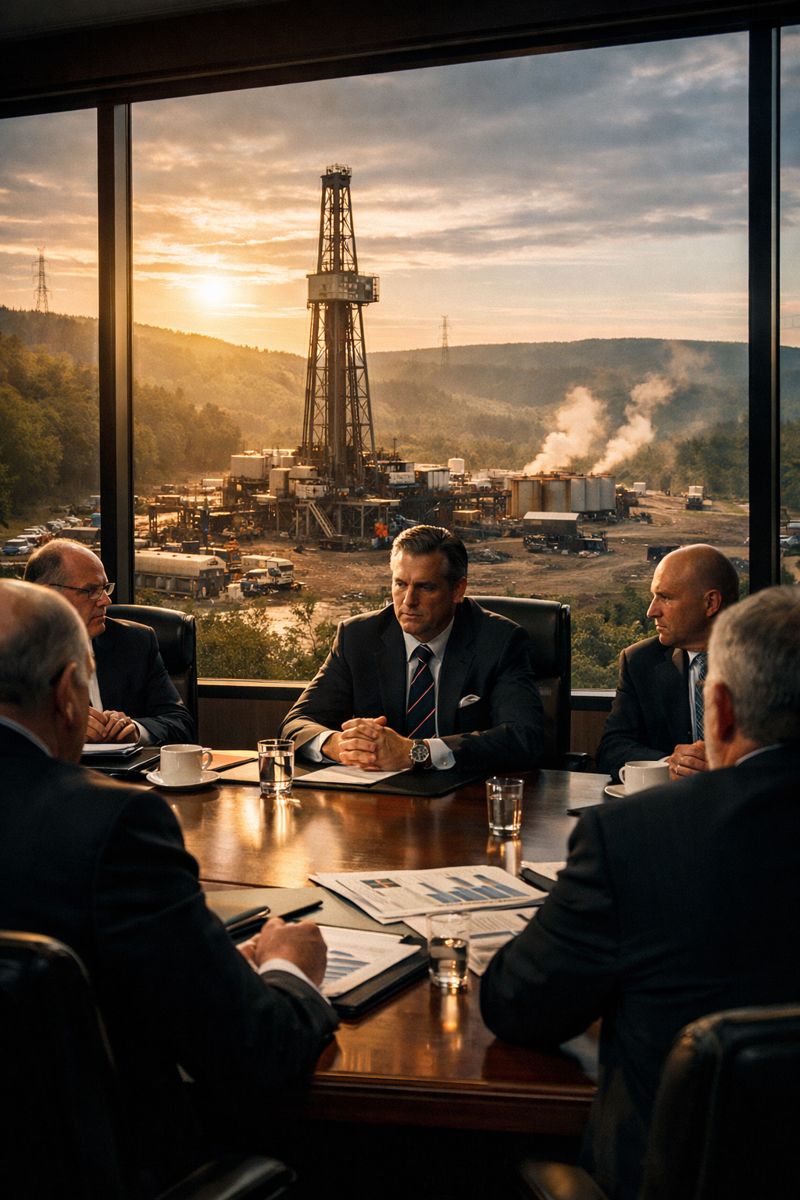
The biggest story in the Marcellus Shale this week isn’t coming out of a well pad. It’s coming out of a boardroom, which is usually wheref it happens, it won’t just be another headline—it’ll be a reminder that shale has grown up, gotten sober, and decided it wants fewer partners but a much bigger house.
This is consolidation with intention.
Both companies already have serious Marcellus exposure. Put them together and you’re not talking about wildcat energy anymore. You’re talking about scale, discipline, and a company that doesn’t need to chase every price swing like it’s looking for validation.
And that matters here.
The Marcellus isn’t the loudest basin in the bar anymore. It doesn’t have to be. It’s steady. It’s deep. It produces gas people actually need, close to where they actually live. A bigger, better-capitalized operator means fewer knee-jerk decisions and more long plays—pipelines, power generation, data centers, exports.
Don’t expect a drilling frenzy.
This isn’t 2008. Nobody’s trying to impress Wall Street with a rig count and a hangover. Investors want restraint. Returns. Cash flow that doesn’t come with excuses. A merged Coterra-Devon outfit would be built for exactly that kind of adulthood.
For local communities, this is the double-edged sword shale knows well. Bigger companies tend to be quieter, more efficient, and less sentimental. That can mean stability. It can also mean fewer jobs per well and decisions made farther from the dirt.
Still, the signal is clear.
Natural gas isn’t going anywhere. Not with power demand climbing, data centers popping up faster than bad habits, and the grid begging for reliability. The Marcellus is still central to that story, even if it’s no longer shouting.
This week wasn’t about drilling.
It was about who’s going to be left standing when the music slows down—and who’s built to stay there without breaking a sweat.