Oil and gas has always been a relationship industry.
Deals may get signed in offices, but trust is usually built long before that.
It happens in conversations.
At events.
On podcasts.
In technical discussions.
Through introductions.
Around shared problems.
And over time, by showing up consistently.
That part of the industry has not changed.
What has changed is where those conversations now happen.
The energy conversation is no longer limited to trade shows, golf outings, sales meetings, or conference booths. It now moves across podcasts, media networks, LinkedIn, industry mixers, technical panels, newsletters, webinars, and smaller communities where operators, service companies, engineers, investors, and technology providers are comparing notes in real time.
That matters.
Because in this industry, visibility is not just about being seen.
It is about being recognized as part of the ecosystem.
The Market Is Moving, Even When Deals Are Not
Oil and gas companies are being asked to think through a lot at once:
AI.
Automation.
Connectivity.
Workforce gaps.
Cybersecurity.
Capital discipline.
Operational efficiency.
Remote monitoring.
Data quality.
Energy transition pressure.
Supply chain uncertainty.
These are not abstract topics anymore. They are showing up in budgets, field operations, board conversations, and vendor evaluations.
During periods like this, companies pay attention to who is contributing useful perspective.
Not just who is advertising.
Who understands the industry.
Who knows the operational constraints.
Who is connected to the right conversations.
Who can speak with credibility.
Who keeps showing up when there is no immediate sale on the table.
That is where long-term positioning is built.
Participation Builds Familiarity
A company does not become trusted in oil and gas overnight.
It becomes familiar first.
Someone hears your team on a podcast.
Then sees your company at an industry event.
Then reads a practical article from your leadership.
Then meets someone from your team at a mixer.
Then hears your name come up again in another conversation.
None of those moments may create a deal by themselves.
But together, they build familiarity.
And familiarity matters because most energy buyers are not looking for unknown vendors when real operational risk is involved.
They are looking for people and companies they have heard of, seen around, and believe understand the environment they operate in.
This Is Bigger Than Podcasts
Podcasts are one part of it.
But the larger point is industry participation.
Being part of the conversation can include:
- appearing on industry podcasts
- sponsoring trusted energy media
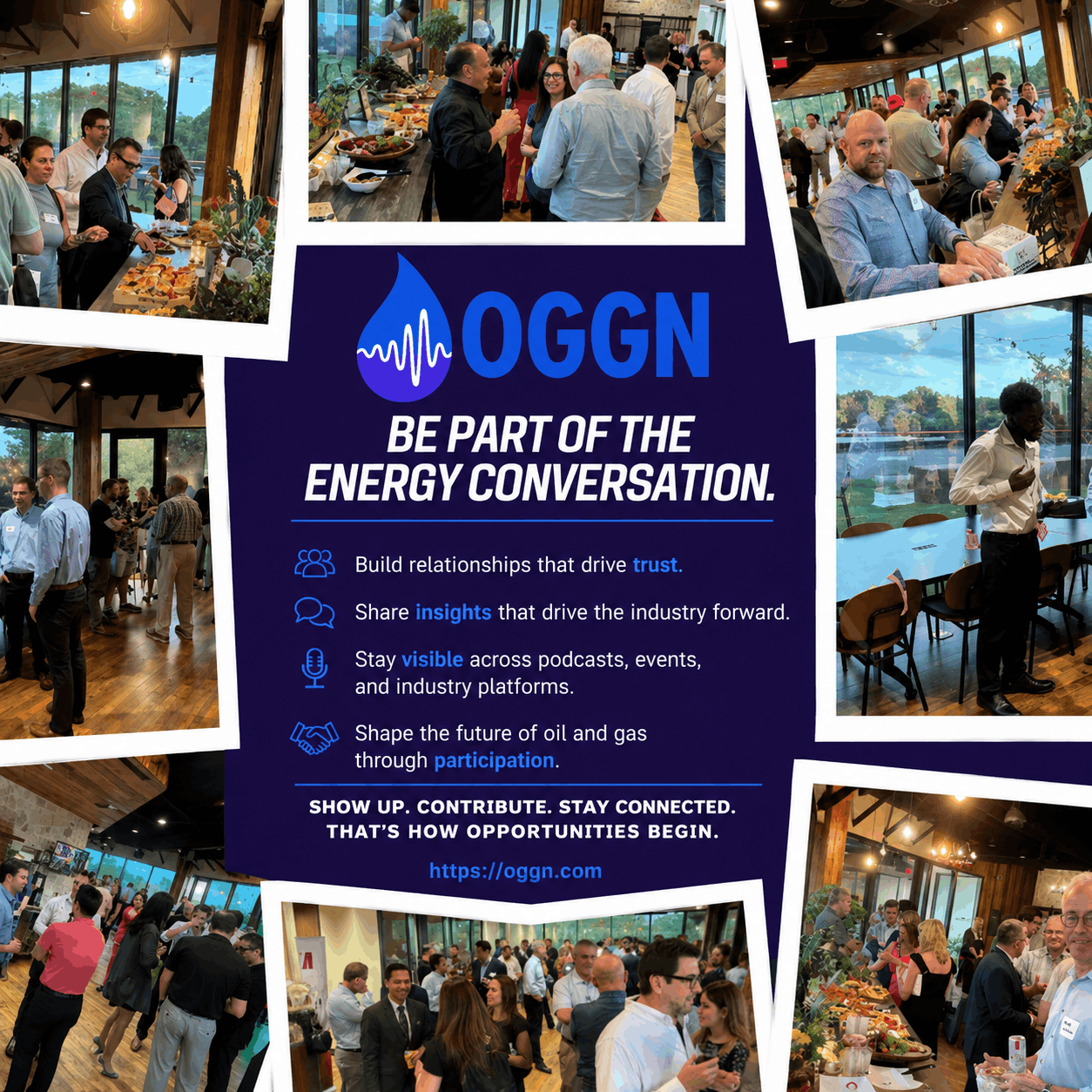
- attending mixers and networking events
- contributing technical articles
- joining panels
- supporting industry communities
- publishing operational insight
- engaging with industry leaders online
- showing up at regional and national events
The channel matters less than the consistency.
Because the real value is not one appearance, one sponsorship, or one post.
The value is the compounding effect of being present where the industry is already paying attention.
Sponsorship Is Not Just Logo Placement
In energy, sponsorship should not be treated like a banner ad.
Done right, it is positioning.
It says your company is not just trying to sell into the industry.
You are investing in the industry conversation itself.
That sends a different signal.
Especially in a market where people can quickly tell the difference between companies that understand oil and gas and companies that are simply trying to market to it.
The Companies That Stay Present Stay Relevant
The companies that disappear between sales cycles usually have to reintroduce themselves every time the market shifts.
The companies that stay present do not.
They remain part of the conversation.
They stay visible to operators, partners, investors, service companies, and technology leaders.
They build trust before the formal opportunity appears.
And in oil and gas, that still matters.
Because when the next project, partnership, sponsorship, investment, or operational need comes up, people rarely start from zero.
They start with who they already know.
Or at least who they feel like they know.
Final Thought
Oil and gas is changing quickly, but the foundation has not changed as much as people think.
Trust still matters.
Relationships still matter.
Reputation still matters.
Showing up still matters.
What has changed is the infrastructure of visibility.
Today, being part of the energy conversation means participating across podcasts, media, events, technical communities, and industry networks that shape how companies are seen long before a buying decision is made.
That is why showing up matters.
Not for vanity.
For trust.
And in this industry, trust is still one of the most valuable assets a company can build.
Matthew Bertram is Chief Marketing Officer of OGGN, President of ModalPoint, and CEO of EWR Digital.